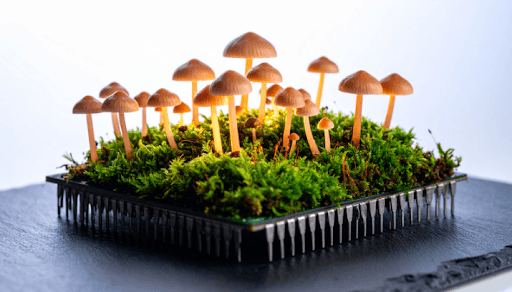
Growing functional mushroom kits is more than a fun gardening project. It’s an invitation into the fascinating world of fungal biology, ecology, and organism behavior. Whether you are a curious beginner or a seasoned grower, each mushroom strain teaches you something unique about how fungi live, adapt, and reproduce. In this post, we will explore what makes four popular functional mushroom kits, Golden Oyster, Pink Oyster, King Oyster, and Antler Reishi, not just productive but deeply educational. You’ll learn about their biological traits, how they respond to environmental changes, and what insights they offer beyond the harvest.
As you explore more, you’ll see that growing mushrooms can be a gateway to understanding organism behavior, environmental response, and even principles of ecology expressed in your own home. These are not just kits that “produce mushrooms.” They are microscopes, classrooms, and research experiences wrapped in lightweight substrate and lively mycelium. Check out our functional mushroom kits today if you want to move beyond theory and observe real mycelial growth, structure, and adaptation at home.
See How Fungi Communicate Through Growth
Before we look at individual strains, it helps to understand that fungi exhibit observable biological principles as they grow. Mushrooms emerge from networks of mycelium, a root-like vegetative structure that seeks out nutrients, responds to humidity and light, and adapts its growth strategy to environmental conditions. Watching mycelium colonize substrate and fruit into mushrooms reveals lessons about:
- Resource allocation: How fungi direct energy to grow mycelium or produce fruiting bodies.
- Environmental response: How humidity, light, and airflow influence morphology.
- Reproductive strategy: How spores form and disperse.
With functional mushroom kits, you’re not just tending a garden. You’re observing life strategy in action.
Golden Oyster: Rapid Growth and Structure Exploration
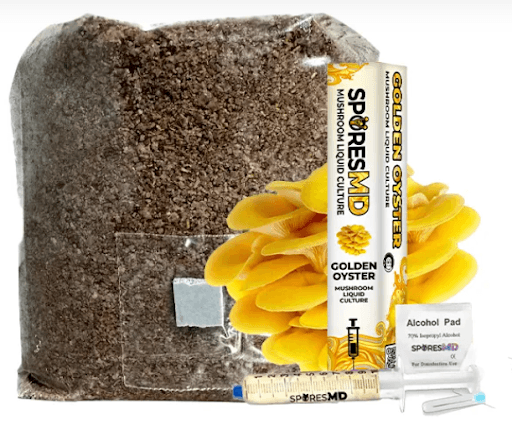
The Golden Oyster mushroom is loved for its vibrant appearance and fast development. What Golden Oyster teaches us lies largely in its efficiency and responsiveness.
Biological Traits to Watch
Golden Oysters tend to form airy, layered clusters with caps that open wide. This gives you a clear view of gill formation and spore-bearing surfaces. Their hyphal network spreads quickly through the substrate, showing efficient resource use and pronounced allocation toward fruiting.
What You Learn Scientifically
- Mycelial expansion: You can observe how quickly hyphae colonize substrate under ideal conditions, revealing how nutrient availability affects growth speed.
- Environmental triggers: Golden Oysters respond visibly to humidity shifts. A slight drop in humidity can slow growth noticeably, while increased moisture accelerates fruiting, a valuable lesson in how fungi sense and adapt to moisture gradients.
- Light response: While not photosynthetic, Golden Oysters use light as a directional signal for fruiting. You’ll see how light exposure influences cap orientation, a simple but powerful lesson in organismal environmental response.
By comparing your Golden Oyster results over multiple cycles, you build intuition about how fungi allocate resources between vegetative growth (mycelium) and reproductive structures (mushrooms). Explore our functional mushroom kits now to experience fungal biology firsthand and see how each strain behaves throughout the growth cycle.
Pink Oyster: Color, Texture, and Environmental Sensitivity
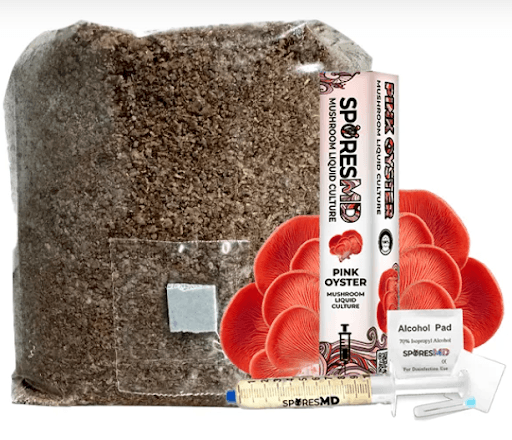
The Pink Oyster is one of the most visually dramatic strains, with rosy fruiting bodies that are a joy to watch develop. Yet beyond the color spectacle, Pink Oyster teaches you about structural adaptation and stress response.
Biological Traits to Watch
Pink Oysters often display delicate, frilly edges and a vibrant color that can shift depending on environmental factors like light and humidity.
What You Learn Scientifically
- Stress indicators: Variations in color intensity can indicate subtle stress or environmental changes. If humidity dips, you may see sharper color contrast or denser fruit body formation, an encoded biological strategy to preserve moisture and reproductive potential.
- Texture changes: The frilly edges and thin cap structures adapt to airflow and hydration, helping you understand how physical stress shapes fungal architecture.
- Light influence: Pink Oysters show variation in cap expansion when light is varied, offering insight into how fungi use light as a cue rather than an energy source.
The Pink Oyster kit lets you see how form complements function and how even slight environmental differences can bring visible change to fungal phenotype.
King Oyster: Structural Strength and Substrate Utilization
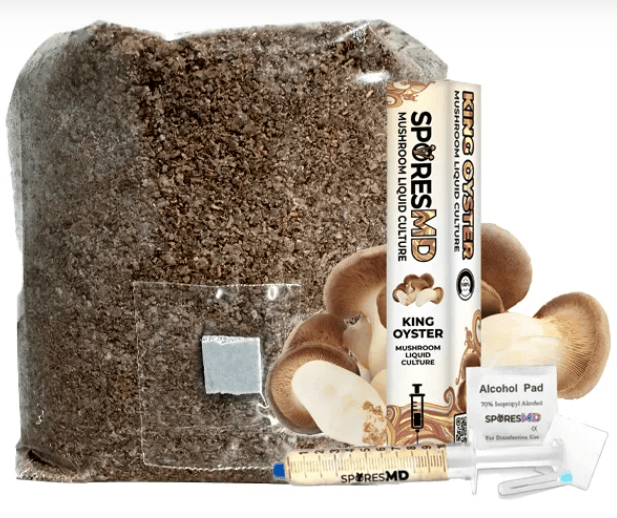
The King Oyster mushroom takes a different biological approach. Its thick stems and robust structure make it a great example of nutrient investment and structural integrity.
Biological Traits to Watch
Unlike the delicate clusters of other oysters, King Oysters allocate more biomass into sturdy stems with fewer, denser fruiting bodies.
What You Learn Scientifically
- Resource partitioning: Observing how King Oyster mycelium concentrates growth into thick stems teaches you how fungi decide between quantity and quality in resource investment.
- Substrate efficiency: King Oysters often colonize denser substrates with slower but more substantial results. This helps illustrate how fungi adjust growth strategy based on nutrient density and physical environment.
- Biomechanical adaptation: The thick structure of the stems also reveals how fungal tissues adapt for mechanical resilience, a valuable context when thinking about organismal adaptation and evolutionary strategy.
With a King Oyster kit, you see a fungus making a different set of growth trade-offs than lighter, more numerous strains.
Antler Reishi: Longevity, Texture, and Adaptation
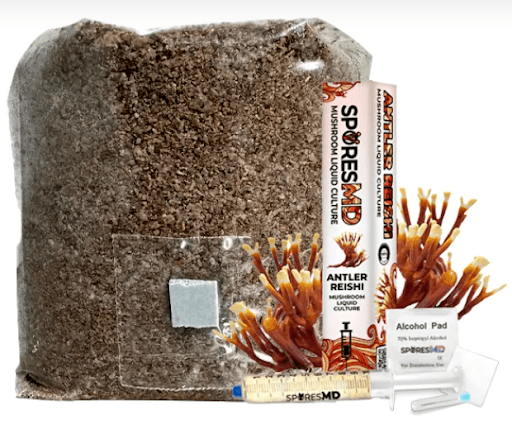
The Antler Reishi mushroom is prized in functional mycology not only for its unique antler-like shape but for the lessons it embodies about growth pacing and organism balance.
Biological Traits to Watch
Antler Reishi often grows more slowly and develops distinct branching patterns. Its texture is firmer and less ephemeral than some other mushrooms you might grow.
What You Learn Scientifically
- Growth pacing: Reishi helps you understand strategic growth delay, how some organisms delay fruiting to accumulate more mycelium for long-term stability.
- Morphological creativity: The antler-like fruit bodies show you how fungi can take wildly different structural forms while still fulfilling the same biological purpose: spore generation.
- Environmental resilience: Reishi’s thick, woody texture is a lesson in survival strategy across diverse conditions, showing how structural modification increases resilience.
Growing Antler Reishi teaches patience, observation, and appreciation for how biological strategy varies even among closely related organisms. Discover our functional mushroom kits and turn curiosity about fungi into hands-on learning with reliable, easy-to-use grow systems.
Explore Shared Biology Across Unique Strains
Functional mushroom kits are more than “grow and harvest” projects. They are dynamic lessons in:
- Mycelial strategy: How fungi use networks to gather nutrients and support fruiting.
- Environmental signaling: How humidity, light, airflow, and nutrient density influence organismal behavior.
- Structural diversity: How different species solve similar biological problems with different physical forms.
When you watch these organisms grow, you’re watching biology happen in real time, from cellular decision making to organism-level adaptation.
Improve Insight Through Daily Observation
To get the most insight from your functional mushroom kits:
- Document growth daily with notes or photos to see how subtle changes affect development.
- Track environmental conditions like humidity and light; fungi are sensitive signal responders.
- Compare strains side by side to appreciate how different biological strategies emerge under similar conditions.
- Don’t rush harvest; some stages of development reveal more about organism strategy than others.
- Ask questions like how fruit body size correlates with substrate use or how humidity shifts morphology.
These practices help transform simple cultivation into meaningful biological observation.
Turn Curiosity Into Deeper Understanding Today
Functional mushroom kits are vivid, hands-on lessons in fungal life strategy. Growing Golden Oyster teaches efficiency and environmental responsiveness. Pink Oyster reveals texture and stress adaptation. King Oyster shows structural investment and nutrient strategy. Antler Reishi teaches patience, resilience, and morphological creativity. Each strain opens a window into organism behavior that extends far beyond the kitchen or grow space.
If you are ready to go beyond gardening and dive into fungal biology with purpose and curiosity, explore our functional mushroom kit collection today. Discover kits that educate, excite, and inspire your next steps in learning about fungi.