


Spores MD
2550 West Union Hills Drive
Suite 350 – #9222
Phoenix, AZ 85027
Showing all 7 results
Disclaimers: For cultivation of legal gourmet and functional mushroom species only, including Lion’s Mane, Oyster, Reishi, Cordyceps, and Shiitake. Not sold for, and may not be used to cultivate, any controlled species.
Species such as mazateca mushrooms fall under controlled classifications and are available for microscopy study only. Misuse is the sole responsibility of the buyer. Must be 18 or older.
Mushroom grow bags are polypropylene containers with filter patches for sterile, hands-off cultivation. Below are the main types ranked by ease of use, key features, and selection guidance.
Gusseted polypropylene bags with 0.2–5 micron filter patches that allow gas exchange while blocking contaminants. Inside, sterilized substrate meets spawn or liquid cultures in a sealed, breathable environment—an approach aligned with Cornell’s small-farm mushroom production research. Many growers find grow bags better than traditional cultivation methods. Formats include empty DIY bags, pre-sterilized all-in-one kits, and fully colonized ready-to-fruit bags.
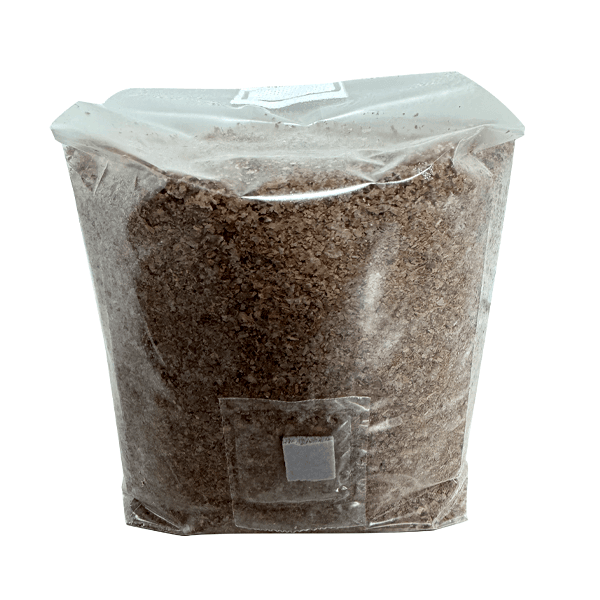
An all-in-one mushroom grow bag contains sterilized grain and bulk substrate with a self-healing injection port. Inoculate with 2.5–15cc of liquid culture or spore syringe—understanding the spore syringe vs liquid culture difference helps you choose—no transfers or extra equipment. First flush in 30–60 days. The lowest-barrier entry point for new cultivators; try functional mushroom kits or learn how to grow lions mane mushrooms at home, and organizations like the North American Mycological Association offer further learning resources.
These split cultivation into two stages: inoculate a grain bag with mushroom spores or culinary liquid cultures to produce spawn, then transfer into a bulk substrate bag for fruiting. Learn what is liquid culture and how to use mushroom spores for detailed technique. This approach mirrors the six-step mushroom farming process outlined by Penn State Extension and gives experienced growers control over spawn ratios, substrate formulations, and colonization timing. Use microscopy liquid cultures for research or build your own growing kit for a custom setup. Standard Unicorn sizes include 14A (grain spawn), 3T (hobby-scale), and 10T (commercial-scale).
| Feature | Why It Matters |
| 0.2–5 micron filter patches | Gas exchange without contaminant entry |
| Heat-resistant polypropylene | Withstands autoclaving at 121°C / 15 PSI |
| Self-healing injection ports | Sterile inoculation without breaking the seal |
| Gusseted construction | Stable base, uniform substrate distribution |
Autoclave-grade polypropylene follows CDC moist-heat sterilization guidelines, ensuring substrates are free of competing organisms before inoculation. Browse the full product catalog for bags in every size.
Match bag to species and scale. Aggressive colonizers (Oyster) need 5µm patches for maximum gas exchange. Slow colonizers (Shiitake) need 0.2–0.5µm for contamination protection over longer cycles.
Size tiers: a 2lb grow bag for beginners, a 5lb grow bag for home growers targeting higher yields, 10 lb+ for commercial operations aiming to meet USDA mushroom grading standards. Choose 5-mil+ polypropylene for autoclave durability. Start with a 3–5 lb all-in-one bag and scale once your process is dialed in.
Pair it with a liquid culture product matched to your target species for the fastest colonization times.

2550 West Union Hills Drive
Suite 350 – #9222
Phoenix, AZ 85027
(833) SPORESMD / (833) 776-7376
Or click here to contact us
eCommerce SEO by Veda Digital
DISCLAIMER: LEGAL INFORMATION ABOUT SPORESMD.COM AND THE LEGALITY OF MUSHROOM SPORES
All Psilocybe cubensis mushroom spores sold on this website are intended exclusively for microscopy, taxonomy, and educational research by trained researchers, educators, and amateur mycologists. SporesMD specializes in providing high-quality spore specimens for legitimate scientific study — our products are strictly not intended for cultivation, germination, or human consumption, and we firmly oppose any such use.
Ungerminated Psilocybe cubensis spores contain no psilocybin or psilocin and are not scheduled under the federal Controlled Substances Act, a position confirmed in writing by the U.S. Drug Enforcement Administration. However, the sale and/or possession of psilocybin mushroom spores is prohibited under state law in California, Georgia, Idaho, and Florida. SporesMD does not ship spore products to these four states. Any order placed for delivery to California, Georgia, Idaho, or Florida will be refused, voided, and refunded. SporesMD reserves the right to refuse or cancel any order at its sole discretion.
Mushroom spores are not intended for human or animal consumption. Customers are solely responsible for ensuring compliance with all applicable local, state, and federal laws regarding the purchase, possession, and use of mushroom spores in their jurisdiction. SporesMD accepts no liability for damages, injuries, legal consequences, or any other issues resulting from the use, misuse, or attempted cultivation of our products. Our commitment is to the quality and viability of our spore specimens for scientific and educational study, without warranties of any kind except as expressly mandated by law.
By placing an order with SporesMD, you affirm that you are at least 18 years of age (21 in states where required), that you are not located in a restricted jurisdiction, and that you are purchasing these specimens solely for lawful microscopy and educational research purposes.
© 2026 SporesMD. All Rights Reserved.