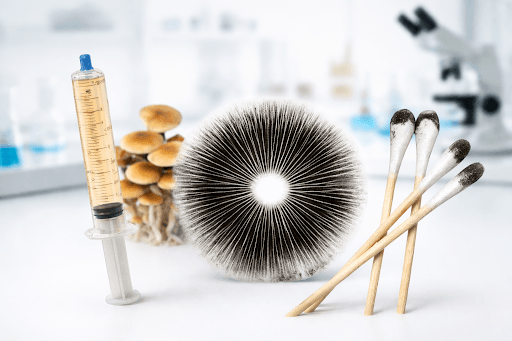
If you are curious about exploring the microscopic world of fungi, one of the first questions you may encounter is how to collect and prepare spores for observation. Mushroom spores are the reproductive particles fungi release, and they offer a rich landscape for study. But when it comes to preparing them for microscopy, there are several collection methods to choose from. Spore prints, spore syringes, and spore swabs are each common approaches, and understanding how they differ helps you choose the best option for your needs.
Whether you are just starting out or you want to expand your fungal study toolkit, learning about spore prints, spore syringes, and spore swabs will make your work easier and more effective. Dive into our spore collection today and compare different formats with confidence.
What Are Spore Prints
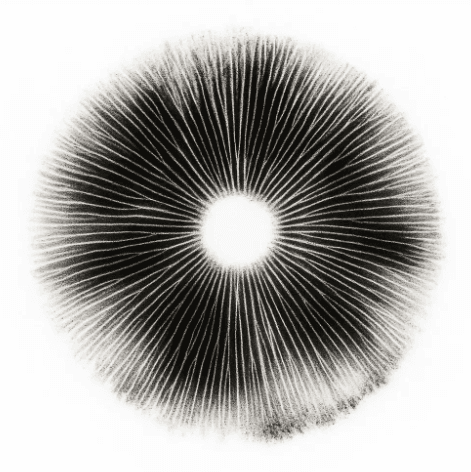
Spore prints are one of the simplest and most visual methods of collecting spores for microscopy. To create a spore print, you place the cap of a mature mushroom on a clean surface, such as a slide or paper, and let it sit for several hours. As the spores fall from the gills, pores, or teeth of the mushroom, they form a pattern that reflects the structure of the hymenium (the spore-bearing surface). Once the print has formed, you can collect spores from the surface for mounting on a microscope slide.
When to Use Spore Prints
Spore prints are ideal when you want to explore:
- The shape and distribution of spores as they fall from the mushroom
- Spore color, which can be important for identification
- The macroscopic pattern of spore release, which can be quite beautiful
Spore prints are great for beginners and educational settings because you can see how spores accumulate and how the pattern reflects the mushroom’s structure. They are also helpful when you want to examine spore color as part of identification or classification work.
Pros of Spore Prints
Spore prints offer:
- A clear visual representation of how spores are released
- A simple and low-cost way to collect spores
- Useful material for basic observation and identification
Cons of Spore Prints
There are some limitations:
- Collecting spores this way can be messy
- It can be challenging to create prints from certain mushrooms with small or inaccessible spore surfaces
- Spores may not be well suspended, making slide preparation harder for some microscopy techniques
If you want to explore spore morphology and spore deposit patterns with minimal equipment, a spore print is a good starting point. Explore spore prints at SporesMD and see the variety of prints you can use for your study. Browse our microscopy prints now and experience classic spore observation firsthand.
What Are Spore Syringes
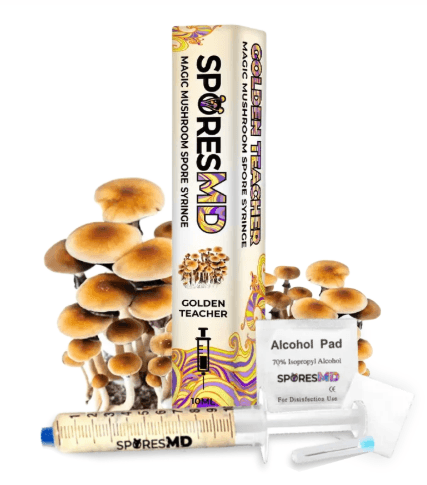
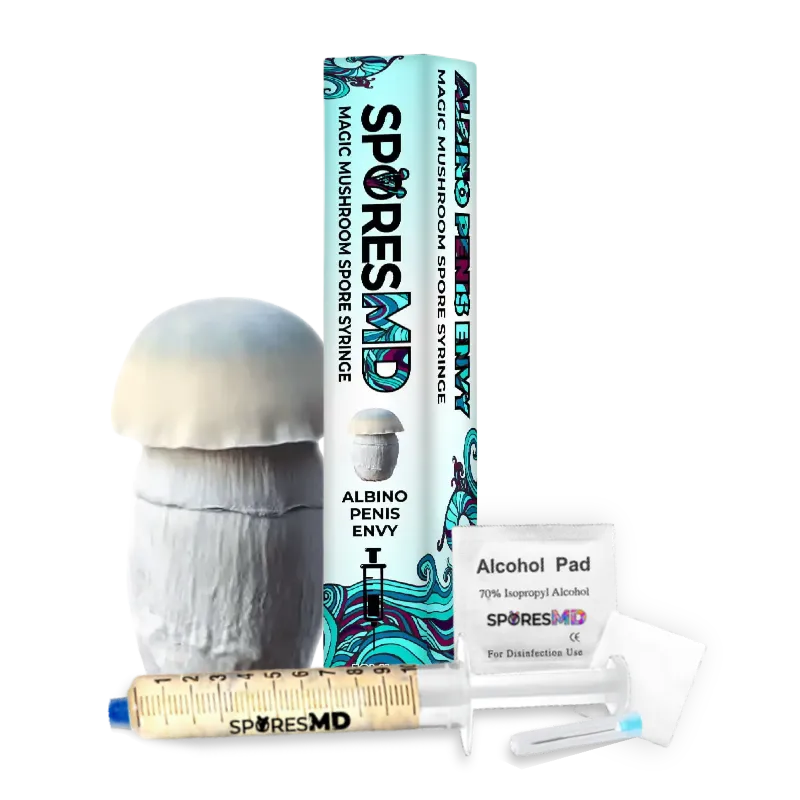
Spore syringes are a widely used method of collecting spores for microscopy and other purposes. A spore syringe consists of a sterile liquid carrier with spores suspended in it so they are evenly distributed throughout the solution. You draw a small amount of this suspension and place it on a microscope slide.
When to Use Spore Syringes
Spore syringes are an excellent choice when you want:
- A uniform distribution of spores
- Easier preparation of microscope slides
- Better control over spore density on the slide
- Material that is ready to use without the extra steps of creating your own print
Because the spores are already suspended, you can prepare slides quickly and without much risk of clumping. This makes spore syringes particularly helpful if you want to do repeated observations or compare spores across different slides.
Pros of Spore Syringes
Spore syringes provide:
- A consistent dispersion of spores, making slide preparation easier
- Ready-to-use material with minimal handling
- Great support for detailed microscopy work
Cons of Spore Syringes
There are a few considerations:
- Syringes may require careful storage to maintain sterility
- They may not always provide the real-world pattern you might see in a spore print
- If you want to practice preparing your own prints or swabs, syringes, skip those learning steps
If you value convenience, reproducible slides, and even distribution for observation, spore syringes are a strong choice. You can check out spore syringes from SporesMD that are ready to use in your next microscopy project. Explore our spore syringe collection today and find options that fit your microscopy goals.
What Are Spore Swabs
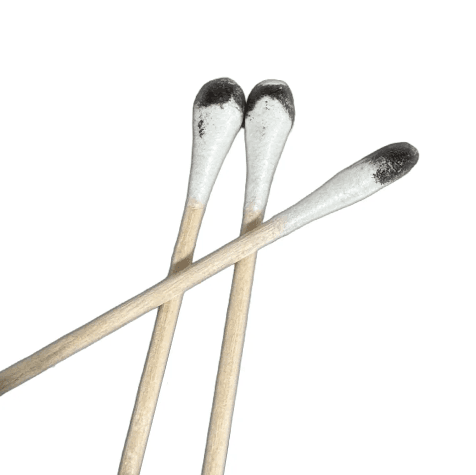
Spore swabs are another easy way to collect spores for microscopy. In this method, a sterile swab is rubbed against a spore surface, such as gills or pores, collecting spores on the tip. You then roll the swab onto a slide to deposit spores directly where you want to look at them.
When to Use Spore Swabs
Spore swabs work well when you are:
- Working with fresh mushroom tissue that may not release spores easily onto a surface
- Collecting spores from tiny or hard-to-print parts of a mushroom
- Interested in quick collection without setting up a print
Swabs are useful for targeted collection, especially when you are dealing with mushrooms that don’t easily produce a large print. They also work well if you want to sample spores from a specific location on the mushroom.
Pros of Spore Swabs
Spore swabs offer:
- Simple, direct collection from the source
- Little preparation is needed ahead of time
- Good for collecting a small amount of spores quickly
Cons of Spore Swabs
Some downsides to keep in mind:
- Distribution on the slide can be uneven if the swab is not handled carefully
- The swab material can sometimes obscure spores if not transferred cleanly
- It can take practice to get a consistent rollout on the slide
If you want a flexible method that lets you target specific parts of the mushroom quickly, swabs are worth exploring. SporesMD offers microscopy swabs that are convenient and ready to use.
How Each Spore Method Stacks Up
Each spore collection method offers a different experience under the microscope. Spore prints are popular for their visual clarity and educational value, making it easy to observe natural spore release patterns and color. They are especially useful for identification and for anyone who enjoys seeing how spores settle and collect.
Spore syringes focus on consistency and convenience. With spores already suspended in liquid, they allow for smoother application and more even distribution on a slide. This makes them a strong choice for repeated observation and detailed comparison between samples.
Spore swabs provide flexibility and speed. They allow for targeted collection directly from a mushroom and work well when creating a full print is not ideal. While they may require a bit more technique, they offer a versatile option for quick study sessions.
Rather than choosing a single method, many enthusiasts find value in using all three to gain a fuller understanding of spore structure and behavior.
Matching Your Method to Your Goals
Your choice of collection method depends on your priorities. If you want an artistic visual pattern and insight into spore color and deposition, starting with spore prints is a great choice. If you value consistency and ease of slide preparation, spore syringes help you achieve clean observations with minimal fuss. If you need flexible sampling from fresh tissue, spore swabs let you collect quickly and move straight to the microscope.
Each method has its place in a well-rounded microscopy practice, and many enthusiasts find value in trying all three. By understanding the strengths of each approach, you can tailor your microscope work to the questions you want to answer and the detail you want to see.
Exploring Spores With Clarity and Purpose
Comparing spore prints, spore syringes, and spore swabs gives you the tools to approach microscopy in the way that fits your goals and experience. Spore prints show you how spores are released in nature, spore syringes make slide preparation consistent and controlled, and spore swabs let you sample quickly from fresh material. All three methods have value and enrich your understanding of fungal spores.
If you are ready to enhance your microscopy toolkit with high-quality spore collections, explore our selection of spore prints, spore syringes, and spore swabs at SporesMD.