








Spores MD
2550 West Union Hills Drive
Suite 350 – #9222
Phoenix, AZ 85027
Showing all 15 results
SporesMD delivers pharmaceutical-grade mushroom spore syringes engineered for serious microscopy research. Our laboratory-grade products contain over 30 unique strains—including rare Psilocybe cubensis varieties—manufactured in ISO-7 certified cleanrooms with 15+ years of mycology expertise. Every syringe arrives sterile, contaminant-free, and suspended in research-grade solution for unparalleled clarity when studying spore morphology, size, shape, coloration, wall thickness, pigment distribution, and symmetry under phase-contrast microscopy.
Each batch undergoes rigorous viability checks and sterility validation via agar plating, ensuring high purity and consistency for taxonomic studies and basidiomycete structure observation. Our user-friendly sterile syringes remain viable for 9+ months when refrigerated (never freeze), giving you extended research windows. Backed by our 100% satisfaction guarantee, these products support ethical, legal research with zero traces of controlled substances—perfect for educational microscopy studies only.
| Product Feature | Research Benefit |
|---|---|
| ISO-7 cleanroom manufacturing | Contaminant-free samples for accurate observation |
| 30+ unique strains available | Diverse phenotypes for comparative studies |
| Phase-contrast microscopy tested | Verified viability and sterility in every batch |
| 9+ month refrigerated shelf life | Extended research timelines without degradation |
| Multi-spore & isolated options | Choose genetic diversity or single-phenotype stability |
Whether you need multi-spore syringes for varied research outcomes or isolated syringes for stable, single-phenotype studies, we’ve engineered the perfect solution for your laboratory. Our competitive pricing—starting at $19.99—delivers exceptional value without compromising quality. For more information on what are mushroom spores, explore our comprehensive research guides.
In 2025-2026, albino varieties and classic strains dominate microscopy research, offering unique genetic traits, visual contrast, and reliability for studying basidiomycete structures. Our selection spans beginner-friendly classics to advanced albino phenotypes, each verified for sterility via phase-contrast microscopy and agar plating.
| Strain Category | Key Features | Ideal For |
|---|---|---|
| Beginner-Friendly | Large spores, consistent structures, reliable prints | Classic cubensis morphology studies |
| Advanced Albino | Unique pigmentation, stable genetics, high contrast | Mutation analysis, complex microscopy |
| Hybrid Varieties | Combined traits, enhanced visual appeal | Comparative genetic research |
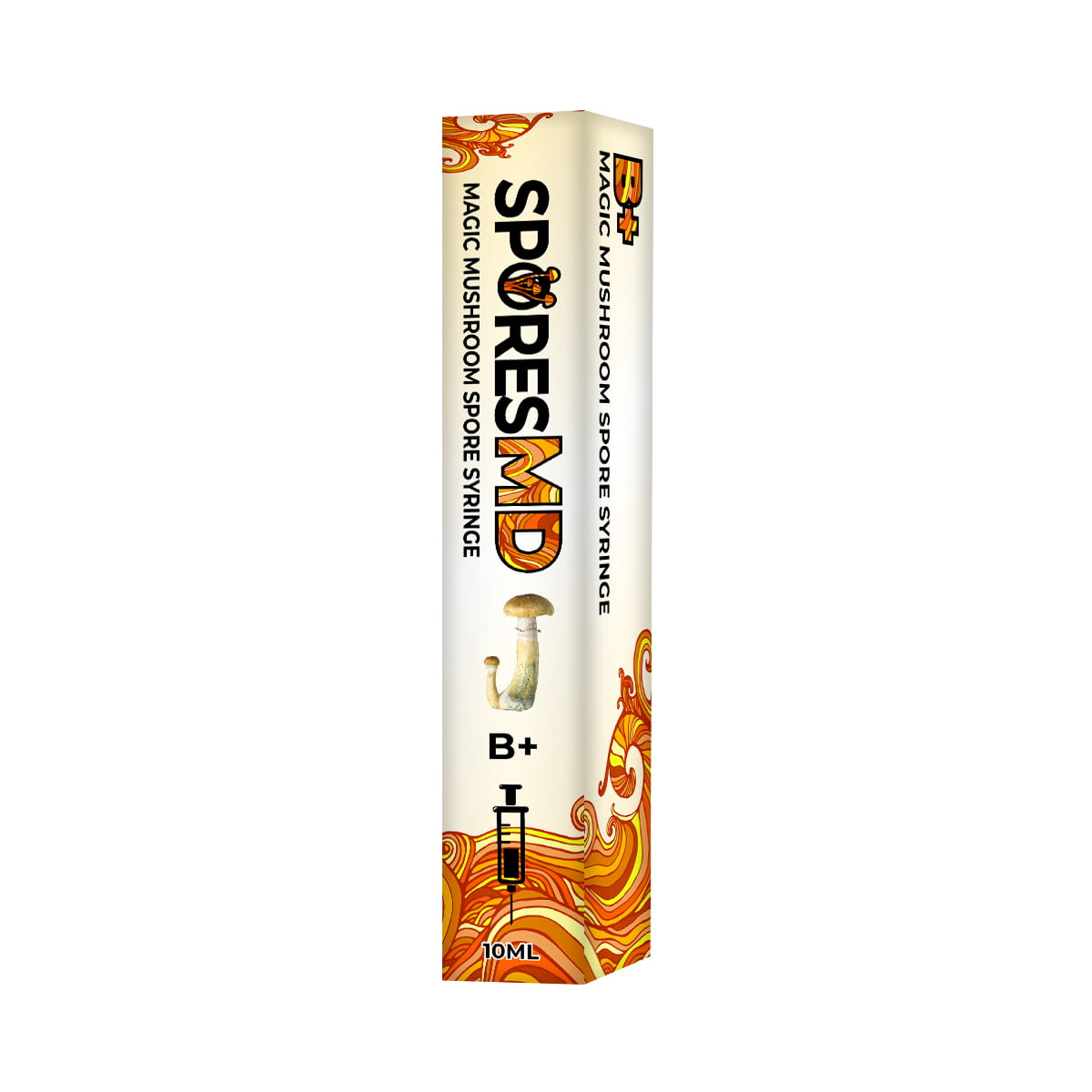
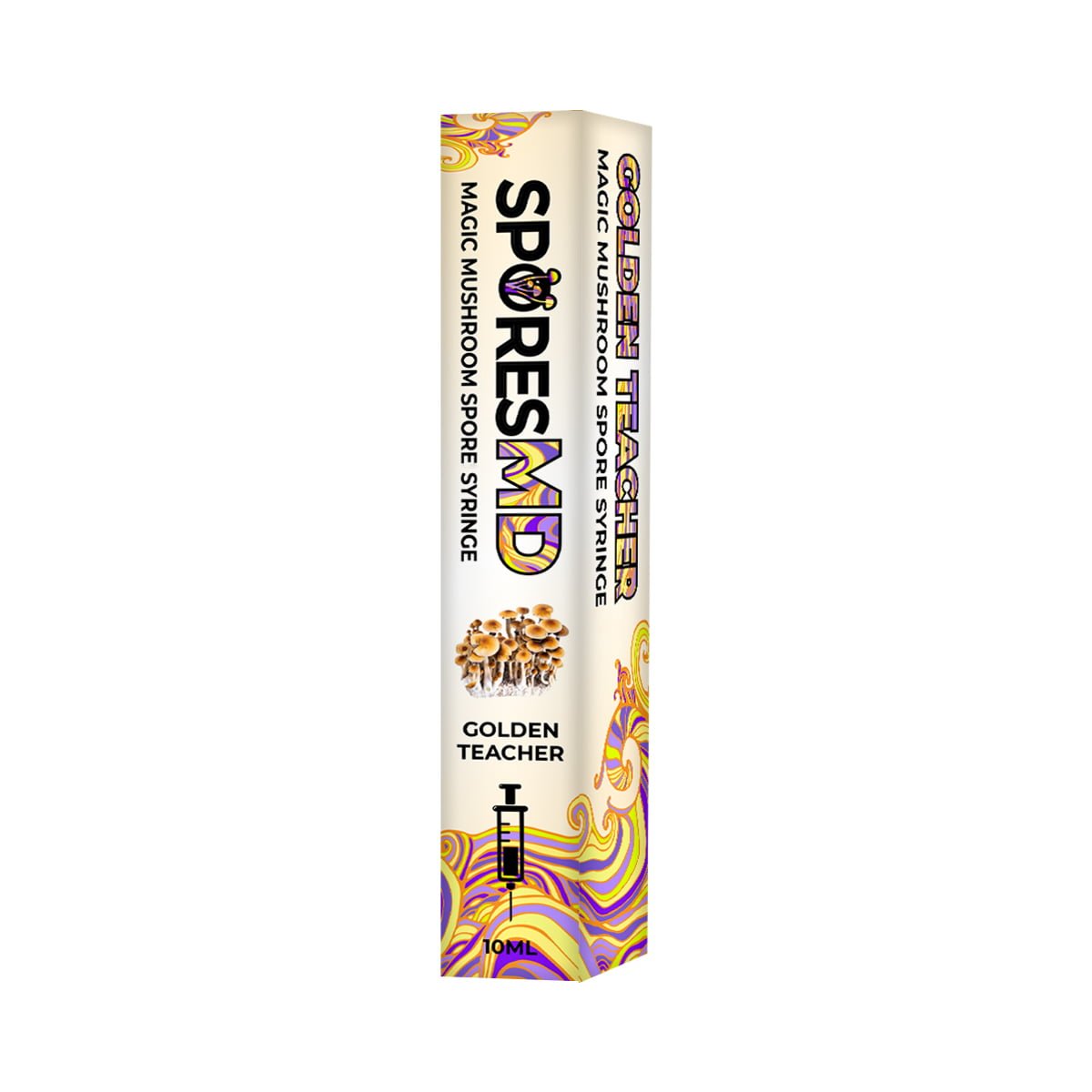
Golden Teacher and B+ remain top choices for beginners, delivering reliable spore prints, consistent structures, and large spore sizes ideal for microscopic examination. These strains showcase classic cubensis morphology and hyphal development patterns, making them perfect for introductory research into basidiomycete cellular structures.
Psilocybe Cambodian offers robust growth characteristics in varied conditions with mild, balanced traits for introductory research. All three strains produce clear, high-contrast spore samples that simplify slide preparation and observation under standard microscopy equipment.
Available beginner-friendly strains:
Each syringe contains sterile solution, manufactured in ISO-7 cleanrooms with HEPA filtration exceeding ISO 14644-1:2015 standards. For researchers interested in alternative formats, we also offer microscopy prints and microscopy swabs for diverse research applications.
Advanced strains deliver unique phenotypes, genetic stability, and morphological diversity for in-depth microscopy on pigmentation, mutations, and spore traits. Jack Frost—a True Albino Teacher x Albino Penis Envy hybrid—features snowy-white appearance and blue gills, combining the best traits of both parent strains for striking visual contrast.
Ghost offers rare albino genetics with stable, compact formations ideal for tracking hereditary spore traits. Yeti presents dense frosty albino mutations, while True Albino Teacher (TAT) provides clean albino genetics with high contrast for microscopy imaging. Penis Envy challenges researchers with limited spore production but rewards with potent, distinctive morphology. Albino A+ showcases pale, translucent spores perfect for complex pigmentation studies.
| Advanced Strain | Key Research Value | Price |
|---|---|---|
| Jack Frost | Hybrid vigor, albino contrast, blue gill structures | $19.99 (spore syringe) / $29.99 (liquid culture) |
| Ghost | Rare albino lineage, stable genetics, compact formations | $29.99 (10ml) |
| True Albino Teacher | Clean albino genetics, high contrast imaging | $29.99 (10ml) |
| Penis Envy | Distinctive morphology, limited spore production | $29.99 (10ml) |
| Albino Penis Envy | Thick stem morphology, minimal spore production | $19.99 (spore syringe) |
Every batch undergoes viability checks via phase-contrast microscopy and sterility validation through agar plating. These advanced strains provide the genetic diversity and visual clarity needed for professional-grade research into basidiomycete evolution, mutation patterns, and phenotype expression. Browse our complete collection of microscopy spores for additional strain options.
Our pharmaceutical-grade spore syringes deliver millions of microscopic fungal spores suspended in sterile distilled water—engineered specifically for microscopy research. Each syringe enables clear observation of spore morphology, including shape, size, color, wall thickness, and structural details under phase-contrast microscopy. A standard 10-20ml syringe provides enough solution to prepare multiple slides for comprehensive basidiomycete studies, with spores appearing as visible dark specks in the solution (though some albino varieties may look nearly clear until held to light).
| Syringe Type | Genetic Profile | Research Application | Shelf Life |
|---|---|---|---|
| Multi-Spore | Diverse phenotypes | Varied morphology studies | 9+ months refrigerated |
| Isolated | Single phenotype | Consistent trait tracking | 6-8 months refrigerated |
Storage is critical: Refrigerate your syringes at 2°C to 8°C (do not freeze) to maintain viability for 9 months or longer. Freezing ruptures spore cells and destroys research value. Multi-spore syringes offer genetic diversity for exploring varied research outcomes, while isolated syringes provide single-phenotype consistency—ideal for tracking hereditary traits with precision. Learn more about how to use mushroom spores in our detailed research guides.
What sets our syringes apart:
For researchers comparing formats, our guide on spore syringe vs spore print provides detailed analysis of each method’s advantages.
Selecting pharmaceutical-grade spores starts with one non-negotiable: ISO-7 or better cleanroom manufacturing. Our facilities exceed ISO 14644-1:2015 standards with HEPA-filtered airflow, eliminating contaminants before they reach your syringe. Every batch we produce undergoes phase-contrast microscopy for viability checks and agar plating for sterility validation, so you’re observing basidiomycete structures, not bacterial colonies.
P-values matter more than most researchers realize. Low-generation cultures (P1-P3) deliver superior viability, faster colonization rates, and contamination resistance compared to tired P4+ strains. Our liquid cultures stay in the P1-P3 range, guaranteeing robust hyphal networks and consistent genetic expression. Test your syringe on agar first: healthy samples show pure white mycelium with an earthy aroma and zero cloudiness. Cloudiness signals bacteria; discard immediately.
Key Quality Indicators to Verify Before Purchase:
Transparent lab protocols separate serious suppliers from basement operations. We publish our testing methods because we have nothing to hide—15+ years of mycology expertise backs every syringe. For guidance on sourcing quality products, visit our comprehensive guide on where to buy mushroom spores.
The mycology research landscape has shifted dramatically toward albino and leucistic varieties, offering researchers unprecedented opportunities to study pigment mutations and genetic stability. These strains deliver distinct visual characteristics under phase-contrast microscopy—from pure white albino phenotypes to ghostly cream-toned leucistic variants—each with unique genetic backgrounds that serve specific research objectives.
Understanding the genetic basis between true albino strains (zero pigment production) and leucistic strains (reduced pigmentation) is critical for selecting the right culture for your microscopy studies.
| Strain Type | Pigmentation | Spore Production | Research Application |
|---|---|---|---|
| True Albino | Zero pigment | Minimal to none | Advanced genetic studies |
| Leucistic | Reduced pigment | Normal production | Comparative morphology |
| Standard Cubensis | Full pigment | Abundant spores | Baseline research |
True Albino Strains
True albino strains carry genetic mutations that completely prevent pigment production, resulting in pure white fruiting bodies that turn blue when bruised. These varieties include Albino Penis Envy (APE), Jack Frost, Yeti 168, and Cosmic Ghost Rider, all producing minimal to zero spores, which makes liquid culture the only reliable propagation method for research continuity.
True albino liquid cultures colonize slower than standard cubensis strains, typically requiring 18-25 days, but reward researchers with unique genetic expressions and exceptional visual clarity under microscopy.
Albino Penis Envy (APE) maintains characteristic Penis Envy morphology with extremely thick stems, small wavy caps, and dense, substantial fruiting bodies—ideal for studying extreme genetic expressions. This strain colonizes slowly and produces minimal to zero spores, making liquid culture essential for researchers studying this advanced phenotype.
Jack Frost is a hybrid created by crossing True Albino Teacher and Albino Penis Envy, combining characteristics from both parent strains into an intermediate morphology featuring thicker stems than typical cubensis but not as dense as pure APE. Jack Frost colonizes faster than APE, typically in 14-21 days, and produces more spores than pure APE, making it more practical for researchers while maintaining striking albino aesthetics.
Yeti 168 and Cosmic Ghost Rider both trace their lineage to True Albino Teacher (TAT) but have been isolated along different paths, creating distinct expressions of similar genetics for comparative research studies. Yeti 168 prioritized practical characteristics with dense, frosty appearance, while Cosmic Ghost Rider emphasized aesthetic qualities while maintaining rare albino lineage with stable genetics.
Leucistic Strains
Leucistic strains produce reduced pigmentation rather than complete absence of pigment, appearing pale with ghostly golden or cream coloration while retaining some pigment production. Crucially, leucistic strains maintain normal spore production and often exhibit the same vigorous growth characteristics as their pigmented parent strains, eliminating the need for tissue culture or liquid culture propagation.
Leucistic Golden Teacher is the classic example, offering all the reliability of standard Golden Teacher with ethereal pale aesthetics—perfect for comparative studies between pigmented and leucistic phenotypes. Researchers can examine our golden teacher spore print and golden teacher spore swabs for detailed morphological analysis.
Alternative Species for Research
Beyond Psilocybe cubensis varieties, researchers interested in evolutionary relationships and species identification can explore closely related species like Psilocybe ochraceocentrata (ochras), originally named Psilocybin natalensis. This species has gained attention worldwide for its aggressive mycelium growth, enhanced contamination resistance compared to average cubensis strains, and ability to produce multiple flushes—valuable traits for comparative mycology studies.
Specialized Strains
Enigma represents a unique mutation that produces irregular blobs rather than traditional fruiting bodies with caps and gills, meaning it produces no spores and can only be propagated through tissue culture or liquid culture—ideal for studying extreme genetic mutations and non-standard fruiting patterns. Available as Enigma Isolated liquid culture ($34.99, 10ml). Explore our full range of liquid cultures for advanced research applications.
Your research investment deserves protection. Our pharmaceutical-grade spore syringes maintain peak viability for 9+ months when refrigerated—but only if you follow precise storage protocols. Temperature control, light protection, and sterile handling determine whether your samples deliver clear microscopic observations or fail mid-study. For detailed guidance, consult our article on how to store spore syringes.
Temperature Control
Refrigerate between 2°C and 8°C (35°F to 46°F) for optimal spore preservation. This range prevents premature germination and bacterial growth while maintaining viability for extended research timelines. Room temperature storage works for short-term use only—1 to 2 weeks maximum—before spore quality degrades.
Never freeze spore syringes. Subzero temperatures form ice crystals that rupture delicate spore walls, rendering your solution unusable.
| Storage Method | Temperature Range | Viability Duration | Best For |
|---|---|---|---|
| Refrigeration | 2°C to 8°C (35°F to 46°F) | 9–24 months | Long-term research projects |
| Room Temperature | 18°C to 22°C (64°F to 72°F) | 1 month maximum | Immediate use within 1–2 weeks |
| Freezing | Below 0°C (32°F) | Destroys spores—never freeze | Not applicable |
Store syringes in their original sterile packaging until ready for microscopy observation. Place syringes in an insulated bag or container within the refrigerator to protect against temperature swings from frequent door access. Learn more about how long do spore syringes last under various storage conditions.
Light and Moisture Management
Spores are light-sensitive—UV exposure degrades DNA and reduces viability over time. Store syringes in dark environments: closets, drawers, or opaque containers within climate-controlled rooms. Direct sunlight accelerates degradation, compromising the clarity of your microscopic observations.
Use airtight containers or sealed bags to minimize humidity exposure. For high-humidity environments, add silica gel packets or oxygen absorbers inside storage containers to maintain low-moisture conditions. Understanding how long do mushroom spores last helps optimize your storage strategy.
Sterile Handling
Keep spore syringes in their original sterile packaging and only open when ready for microscopy observation. When using a syringe, ensure the needle never contacts non-sterile surfaces, including hands.
After use, sterilize the needle with heat before returning the syringe to storage. Avoid frequent opening of storage containers—each exposure increases the risk of airborne microbes contaminating your spore solution.
| Handling Step | Protocol | Why It Matters |
|---|---|---|
| Opening packaging | Only when ready to use | Prevents premature contamination exposure |
| Needle contact | Avoid all non-sterile surfaces | Maintains pharmaceutical-grade sterility |
| Post-use sterilization | Heat-sterilize needle before storage | Eliminates introduced contaminants |
| Container access | Minimize opening frequency | Reduces airborne microbe exposure |
Label all spore syringes with the date of purchase, strain type, and species for easy tracking. Regularly check stored containers for signs of condensation, contamination, or degradation. Inspect syringes periodically for any visible signs of compromise—cloudiness, discoloration, or unusual odors indicate contamination requiring immediate disposal. For collection techniques, see our guide on how to collect mushroom spores.
When you’re ready to invest in pharmaceutical-grade liquid cultures and spore syringes for serious microscopy research, SporesMD delivers unmatched quality backed by 15+ years of mycology expertise. Our ISO-7 certified cleanrooms with HEPA-filtered airflow exceeding ISO 14644-1:2015 standards ensure every product arrives contaminant-free and research-ready. Visit our research labs to learn more about our manufacturing processes.
| Quality Advantage | Your Research Benefit |
|---|---|
| ISO-7 cleanrooms with HEPA filtration | Zero contaminants for clear observation |
| Phase-contrast microscopy testing | Verified viability in every batch |
| Agar plating validation | Guaranteed sterility for accurate studies |
| 15+ years mycology expertise | Trusted protocols, consistent results |
| 100% satisfaction guarantee | Risk-free purchase for your research |
Spore Syringe Collection (10ml sterile applicators, $19.99 each):
Premium Liquid Culture Collection (10ml, $29.99 each):
Enigma Isolated (10ml, $34.99) – Unique mutation patterns for specialized research
Additional Research Products:
Every product is backed by our 100% satisfaction guarantee, ethical sourcing practices, and strict legal compliance. We manufacture with zero traces of controlled substances, ensuring your research remains focused on scientific observation and educational microscopy studies only. Browse our complete spore catalog or explore our selection of spore syringes for your research needs.
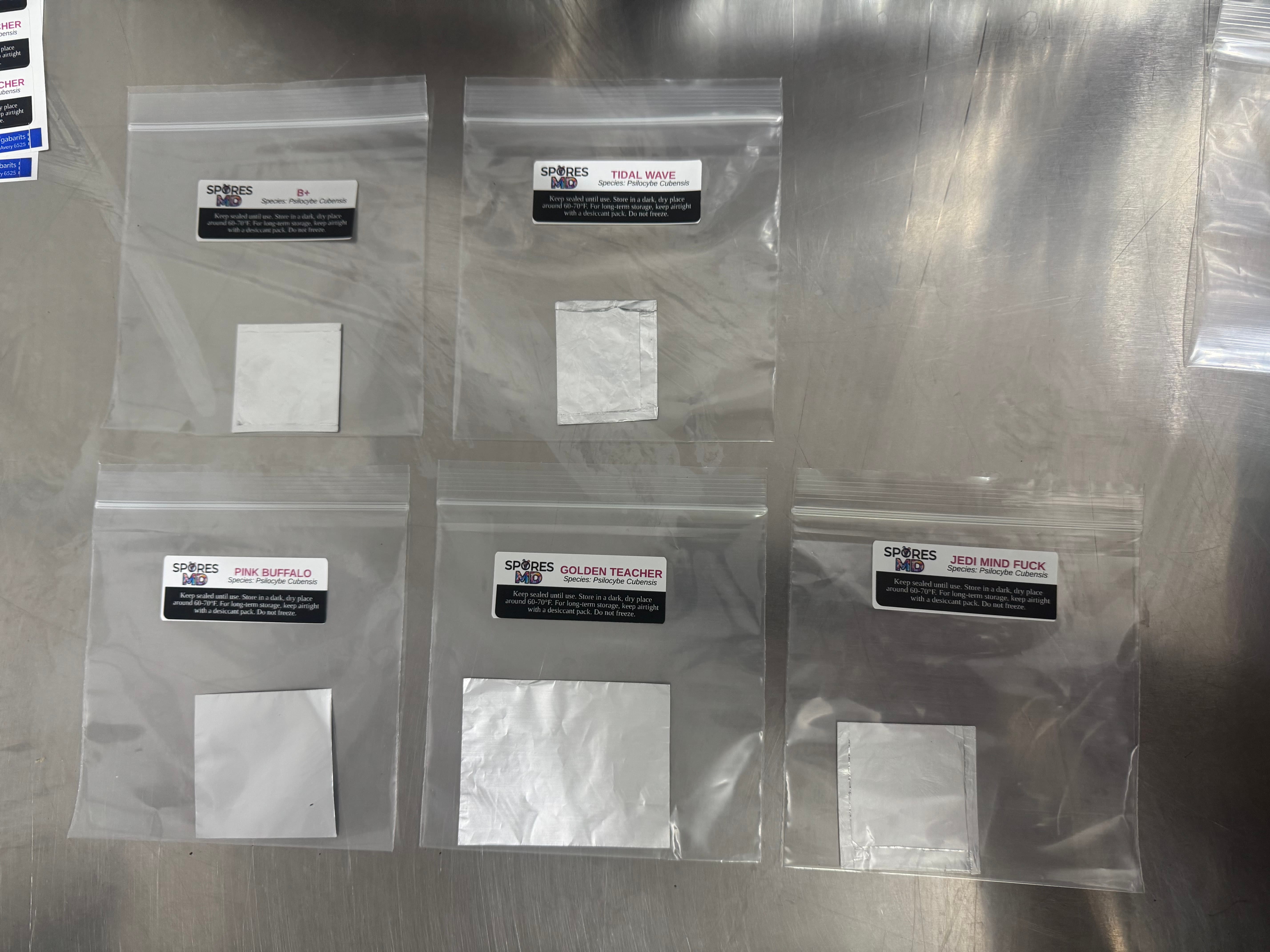
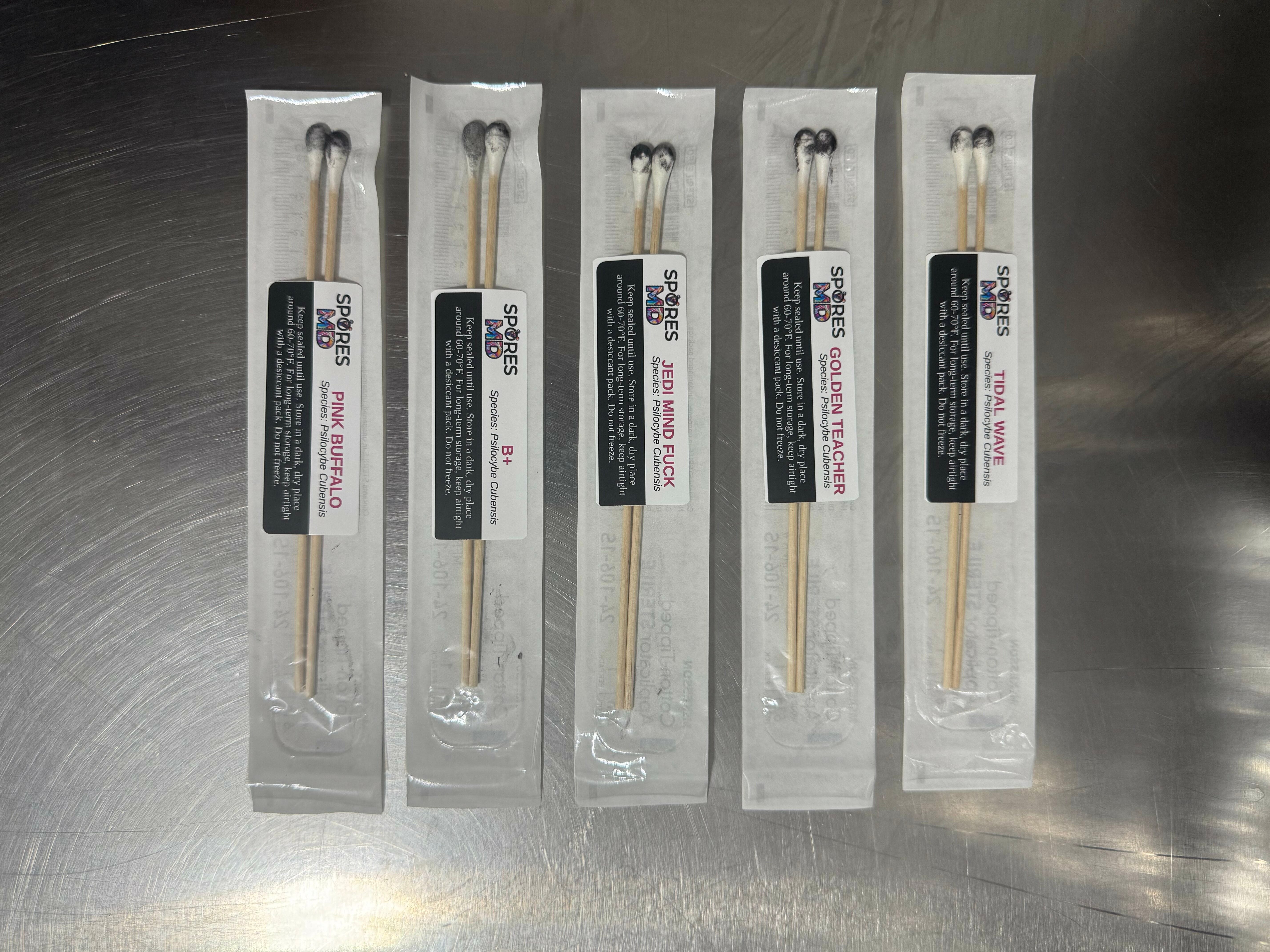
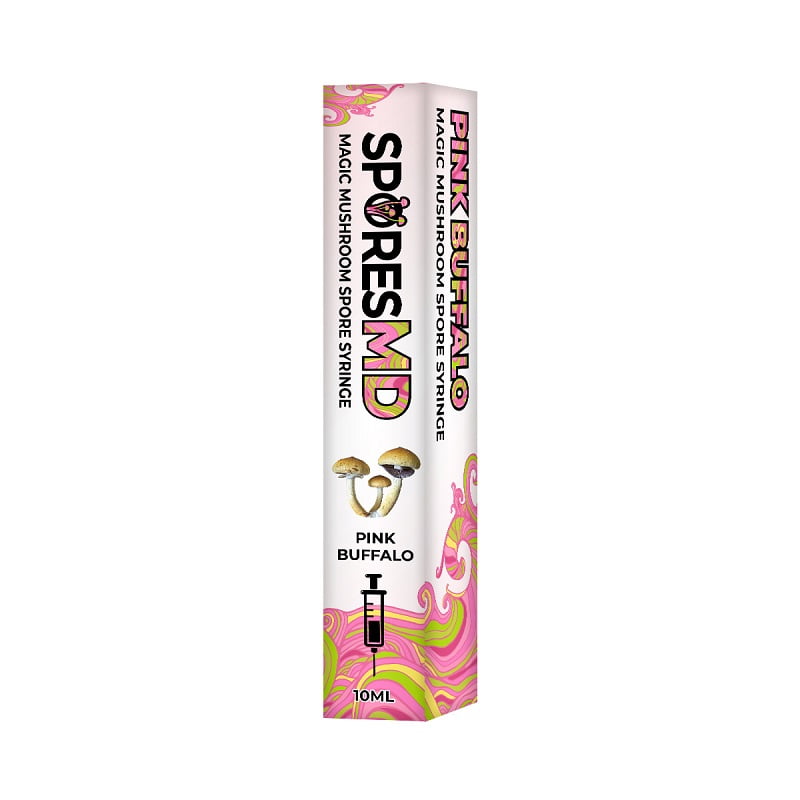
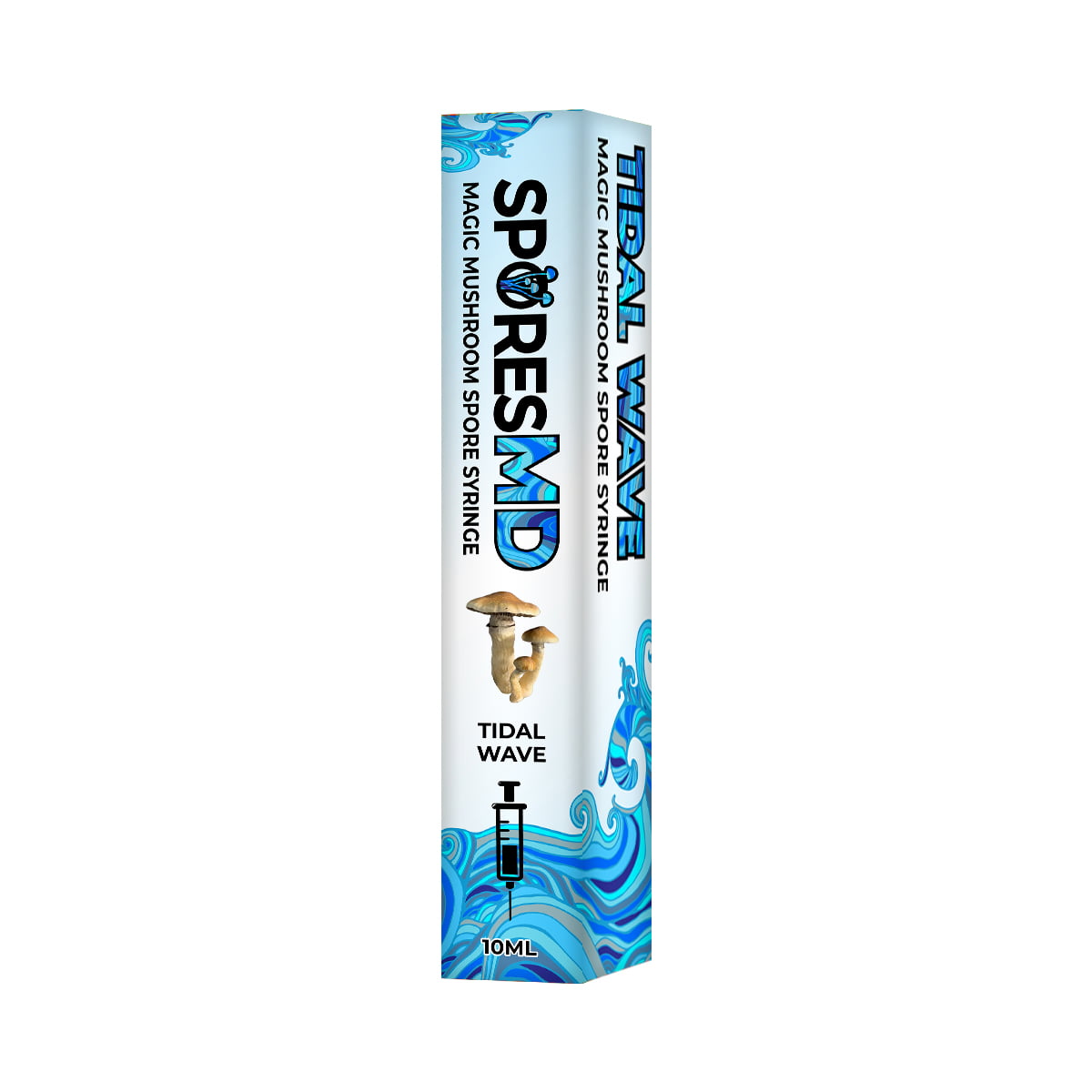
For alternative formats, we offer comprehensive collections including Image: B+ Mushroom Spore Print, Image: B+ Mushroom Spore Swabs, Image: Jedi Mind Mushroom Spore Print, Image: Jedi Mind Mushroom Spore Swabs, Image: Pink Buffalo Mushroom Spore Print, Image: Pink Buffalo Mushroom Spore Swabs, Image: Tidal Wave Mushroom Spore Print, and Image: Tidal Wave Mushroom Spore Swabs.
What exactly are mushroom spores?
Mushroom spores are microscopic reproductive cells—the fungal equivalent of seeds—containing the complete genetic blueprint of the parent mushroom. Each spore measures just 5-15 micrometers, invisible to the naked eye but packed with DNA that determines strain characteristics like growth patterns, morphology, and pigmentation. Unlike mature fruiting bodies, spores are non-psychoactive, containing zero psilocybin or psilocin, making them fully legal for microscopy research in most jurisdictions. For comprehensive information, read our detailed guide on what are mushroom spores used for.
Under phase-contrast microscopy, spores reveal strain-specific features: shape (ellipsoid, subellipsoid, or cylindrical), pigment color (purple-brown, rust, or translucent in albinos), wall thickness, and density. Multi-spore syringes deliver millions of these cells suspended in sterile distilled water—perfect for slide preparation and long-term viability when refrigerated.
| Spore Feature | Research Value | Observable Under Microscopy |
|---|---|---|
| Shape & Size | Taxonomic identification | Ellipsoid, subellipsoid patterns |
| Pigment Color | Strain differentiation | Purple-brown, rust, translucent |
| Wall Thickness | Genetic stability markers | Varies by strain lineage |
| Density | Viability assessment | Spore concentration per ml |
Are mushroom spores legal to buy and study?
Yes—spores are legal to possess and study for microscopy in most US states, with exceptions in California, Georgia, and Idaho where possession is restricted. In the UK and many other regions, spores remain compliant under microscopy-only use. Spores contain no controlled substances, making them suitable for educational research, taxonomy studies, and hyphal network observation.
SporesMD products are intended solely for research observation, not cultivation. Every syringe ships with clear disclaimers reinforcing educational purposes. Our 15+ years of mycology expertise ensures you receive contaminant-free, viability-tested cultures for studying basidiomycete structures.

2550 West Union Hills Drive
Suite 350 – #9222
Phoenix, AZ 85027
Disclaimer: SporesMD specializes in providing spore specimens exclusively for microscopy and educational use. Our products are strictly not intended for cultivation purposes, and we firmly oppose any such use. Customers are responsible for ensuring compliance with all relevant laws and regulations regarding spore possession and use. SporesMD accepts no liability for damages, injuries, or legal issues resulting from the use or misuse of our products. Our commitment is to the quality of our spore specimens for scientific and educational study, without warranties except as mandated by law.
© 2026 SporesMD. All Rights Reserved.